


If you want to study in Malta, you are probably looking for a destination that combines quality education, English-speaking daily life, reasonable access to Europe, and a student experience that feels exciting but manageable. Malta has become one of the most attractive study destinations in Europe because it offers international courses, English-language learning, Mediterranean lifestyle, and strong connections to business, tourism, healthcare, technology, and hospitality.
For many international students, Malta is easier to imagine than larger destinations such as the UK, Canada, Australia, or the United States. The country is compact, sunny, well connected, and welcoming to students from many different backgrounds. Whether you want to take an English course, start a foundation programme, complete a bachelor’s degree, or study a master’s course, Malta can be a practical and rewarding choice.
Ready to compare courses and get step-by-step support? Apply to study in Malta with OutreachStudy and our team will help you choose the right option.
Table of Contents
- Why study in Malta?
- Who is Malta best for?
- Types of courses available in Malta
- How to choose the right school or college
- How much does it cost to study in Malta?
- Accommodation options for students
- Malta student visa basics
- Can international students work in Malta?
- Best places to live and study in Malta
- How OutreachStudy helps you apply
- FAQ
Why Study in Malta?
Malta is a small country, but it offers a strong mix of education, lifestyle, and international opportunity. English is one of Malta’s official languages, which makes daily life easier for many international students. You can use English in class, in shops, at public offices, during activities, and in many workplaces.
The country is also part of the European Union and the Schengen Area. This gives students a European study experience in a destination that is smaller and often easier to navigate than many major European capitals.
Students often choose Malta because it offers:
- English-speaking education and daily communication
- Universities, colleges, and English language schools
- A Mediterranean climate and coastal lifestyle
- A multicultural student environment
- Short-term and long-term study options
- Access to Europe and international networks
- Practical programmes in business, tourism, IT, healthcare, and hospitality
Malta is especially attractive for students who want a balance between serious study and a social, active lifestyle. You can attend classes during the week and explore beaches, historic cities, cafes, events, and cultural sites during your free time.
If you are comparing destinations, our full study in Malta page can help you understand your options before applying.
Who Is Malta Best For?
Malta can work well for different types of international students. The right choice depends on your goals, budget, academic background, and visa situation.
Students Who Want to Improve English
Many students begin with an English course before moving into higher education or professional work. Malta is one of the most popular English study destinations in Europe because students can practise English inside and outside the classroom.
If your English level is not yet ready for university, you may start with General English, Intensive English, IELTS preparation, or an academic English course. You can compare options on our English courses in Malta page.
Students Looking for European Higher Education
Malta offers bachelor’s, master’s, diploma, and foundation options through universities and private colleges. Many programmes are taught in English, which makes Malta attractive for students from non-English-speaking countries.
Popular study areas include:
- Business and management
- Tourism and hospitality
- Information technology
- Health and social care
- Finance and accounting
- Marketing and communication
- English language and foundation studies
Students Who Want a Smaller Destination
Some students prefer Malta because it is easier to move around than larger countries. The island is compact, public transport connects main student areas, and many schools are located near accommodation, shops, and social areas. This can be helpful if it is your first time studying abroad.
Types of Courses Available in Malta
Malta offers several study paths. Before choosing a course, think about your current level, your long-term goal, your budget, and your visa needs.
English Language Courses
English courses are one of the most common ways to study in Malta. These courses can be short or long, depending on your goal.
- General English
- Intensive English
- Business English
- IELTS preparation
- Cambridge exam preparation
- One-to-one English lessons
- English with activities or accommodation
Foundation Courses
Foundation programmes can help students prepare for higher education. They may include academic English, study skills, subject preparation, and basic academic modules. This route can be useful if your previous qualifications do not directly meet entry requirements for a bachelor’s degree.
Bachelor’s and Master’s Degrees
Bachelor’s programmes in Malta usually suit students who want a full undergraduate education in Europe. Master’s programmes are suitable for students who already hold an undergraduate degree and want to specialize. Entry requirements depend on the institution, programme, and your previous qualifications.
You may need academic transcripts, passport copy, English language proof, a motivation letter, CV, and qualification recognition documents if required.
Diploma and Professional Courses
Diploma and professional courses can be a practical option for students who want focused training. These may be shorter than full degrees and may target specific industries. Before applying, check the institution, course level, recognition, duration, and visa implications.
How to Choose the Right School or College in Malta
Choosing where to study is one of the most important decisions you will make. The cheapest course is not always the best choice, especially if it does not match your academic goal, visa plan, or accommodation needs.
Before applying, check:
- Is the school, college, or university properly licensed?
- Is the course suitable for your level?
- Is the qualification recognized or appropriate for your goal?
- What are the entry requirements?
- What documents are needed?
- Are classes taught in English?
- Does the institution support visa documentation?
- What is the location like?
- Are accommodation options available?
- What are the total costs, not only tuition fees?
For higher education, students may also need to understand the Malta Qualifications Framework and recognition process. The Malta Further and Higher Education Authority provides official information about academic qualifications and recognition.
If you already know that Malta is your preferred destination, apply to study in Malta with OutreachStudy and our team will guide you through the next steps.
How Much Does It Cost to Study in Malta?
The cost to study in Malta depends on your course type, institution, duration, accommodation, lifestyle, and season. English courses are usually priced weekly, while higher education programmes are usually priced per semester or academic year.
Typical cost categories include:
- Tuition fees
- Registration or application fee
- Course materials
- Accommodation
- Food and groceries
- Transport
- Health insurance
- Visa-related fees
- Residence permit costs if applicable
- Personal spending
English course prices can vary depending on intensity and season. Summer is often more expensive because demand is higher. Longer bookings may offer better weekly value.
Higher education tuition depends on the institution and programme. Business, IT, hospitality, and health-related courses may have different fee structures.
Accommodation is often one of the biggest monthly costs. Students should compare the total package, not only tuition. A course that looks cheap may become expensive if accommodation and transport are not planned properly.
For a deeper breakdown, read our guide to the cost of studying in Malta.
Accommodation Options for Students
Finding the right accommodation can make your study experience much easier. Malta has several common student housing options, and the best choice depends on your budget, comfort level, and location.
Student Residence
Student residences are popular because they are social and often located near schools or transport routes. They may include shared rooms, private rooms, shared kitchens, laundry areas, and common spaces.
Host Family
A host family can be useful for students who want a more supported environment and extra English practice. It may include breakfast, dinner, or other meal options depending on the package.
Shared Apartment
Shared apartments are common for longer stays. They can offer more independence but require more responsibility. You may need to manage bills, cleaning, deposits, and contracts.
Before booking accommodation, check the distance to school, transport access, deposit rules, bills, room type, cleaning arrangements, contract length, and cancellation policy. You can also review our student accommodation in Malta guide for more details.
Malta Student Visa Basics
Visa rules depend on your nationality, course type, and course duration. EU and non-EU students may follow different processes, so it is important to check your situation before applying.
For non-EU students, Malta generally separates study visa guidance by course length. According to official Identita guidance, courses up to 90 days may fall under short-stay student visa rules, while courses longer than 90 days may require long-stay visa or residence procedures.
Useful official pages include student visa information from Identita, guidance for courses not exceeding 90 days, and guidance for courses exceeding 90 days.
Common visa documents may include:
- Valid passport
- Acceptance letter from the school or institution
- Proof of accommodation
- Proof of funds
- Health insurance
- Travel booking information if required
- Academic documents
- Visa application forms
- Passport photos
- Payment proof
Requirements can change, and each case can be different. Always check official sources and get support before submitting your application. For a practical overview, read our Malta student visa guide.
Can International Students Work in Malta?
Some international students may be allowed to work in Malta, but this depends on visa type, course type, nationality, and official conditions.
Identita’s student employment guidance explains that some students following courses exceeding 90 days may be allowed to work up to 20 hours per week under specific conditions. Because rules can change, students should not rely on work income to fund the full cost of study. It is better to prepare your budget before arrival and treat part-time work as a possible support, not a guarantee.
Best Places to Live and Study in Malta
Malta is small, but each area has a different feeling. Your best location depends on your school, lifestyle, and budget.
Valletta
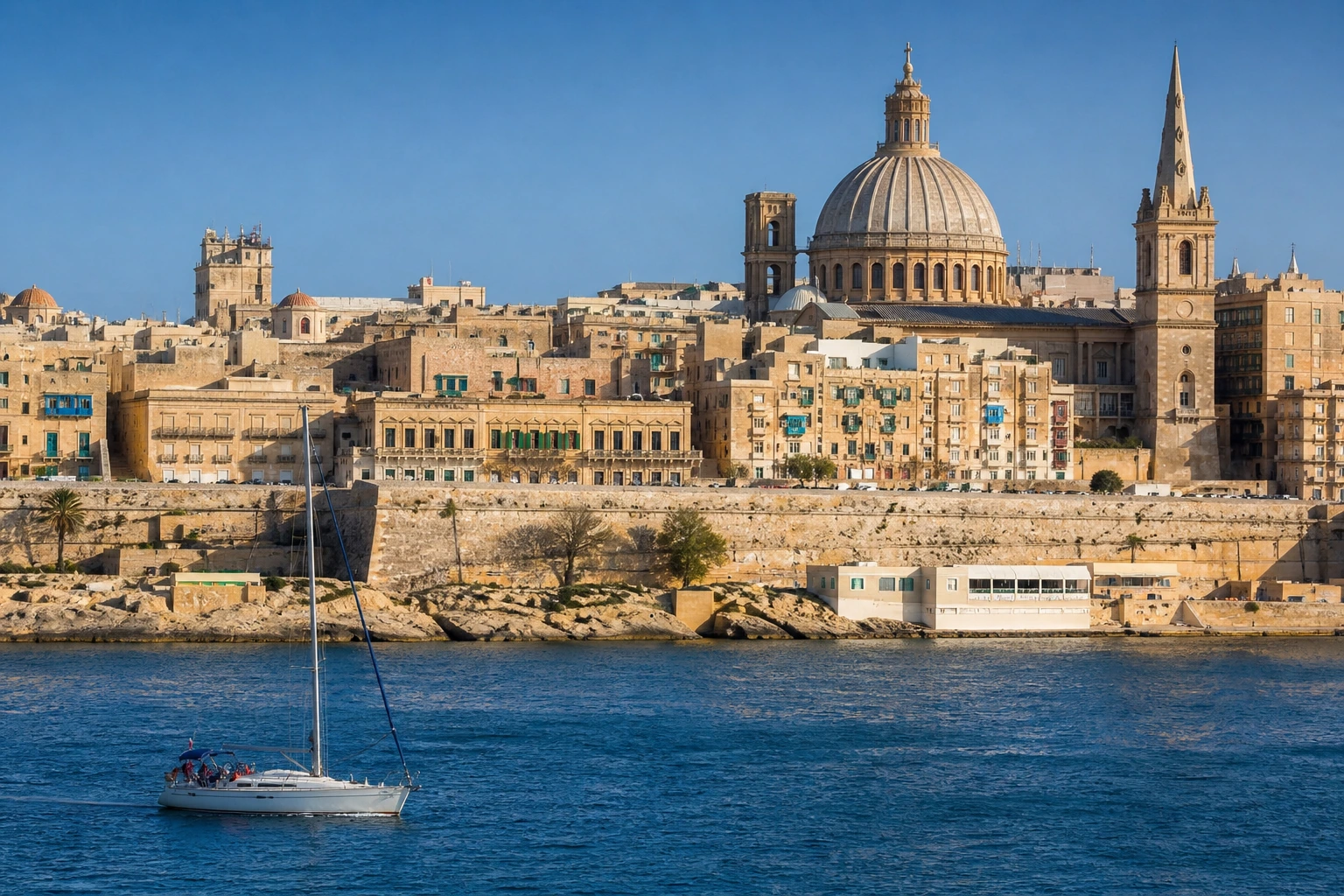
Valletta is Malta’s capital and a UNESCO-listed historic city. It is beautiful, central, and well connected, but accommodation can be limited or expensive.
Sliema and St Julian’s
Sliema is popular with students because it has shops, cafes, seafront areas, and transport connections. St Julian’s is known for entertainment, restaurants, nightlife, and language schools. These areas can be good choices for students who want a social environment.
Msida, Gzira, and Birkirkara
Msida and Gzira are practical for students because they are close to education institutions, transport, and more affordable accommodation options compared with some central areas. Birkirkara and nearby towns can be more residential and may offer better value depending on your commute.
When choosing where to live, do not only look at the map distance. Check bus routes, traffic, walking time, and whether your classes are in the morning, afternoon, or evening.
How OutreachStudy Helps You Apply
Applying to study abroad can feel confusing, especially when you need to compare courses, prepare documents, understand costs, and follow visa steps. OutreachStudy helps students make clearer decisions and avoid common mistakes.
Our team can help you with:
- Choosing the right course or institution
- Comparing English courses and higher education options
- Understanding tuition and living costs
- Planning accommodation
- Preparing application documents
- Understanding visa steps
- Communicating with schools or colleges
- Moving from enquiry to application with confidence
FAQ
Is Malta a good place to study for international students?
Yes. Malta is a strong option for international students who want English-speaking education, a European location, Mediterranean lifestyle, and a smaller destination that is easier to navigate than many larger countries.
Can I study in Malta in English?
Yes. English is an official language in Malta, and many English courses, foundation programmes, diplomas, bachelor’s degrees, and master’s programmes are available in English.
How much does it cost to study in Malta?
The cost depends on the course, duration, school, accommodation, and lifestyle. Students should budget for tuition, accommodation, food, transport, insurance, visa costs, and personal expenses.
Do I need a visa to study in Malta?
It depends on your nationality and course duration. Non-EU students may need a short-stay visa for courses up to 90 days or a long-stay visa or residence process for longer courses. Always check official Identita guidance before applying.
Can I work while studying in Malta?
Some international students may be allowed to work under specific conditions, often linked to course duration, residence status, and permit rules. Students should check official guidance and should not depend only on part-time work to fund their studies.
Start Your Study in Malta Application
Malta can be a smart choice if you want quality education, English-speaking daily life, and a European student experience in a welcoming Mediterranean country. The key is choosing the right course, preparing your documents correctly, and understanding the full cost before you apply.
Ready to begin? Apply now with OutreachStudy and get expert support for your study in Malta journey.